Nov 11, 2021
Haben Sie Fragen zur Virushepatitis?
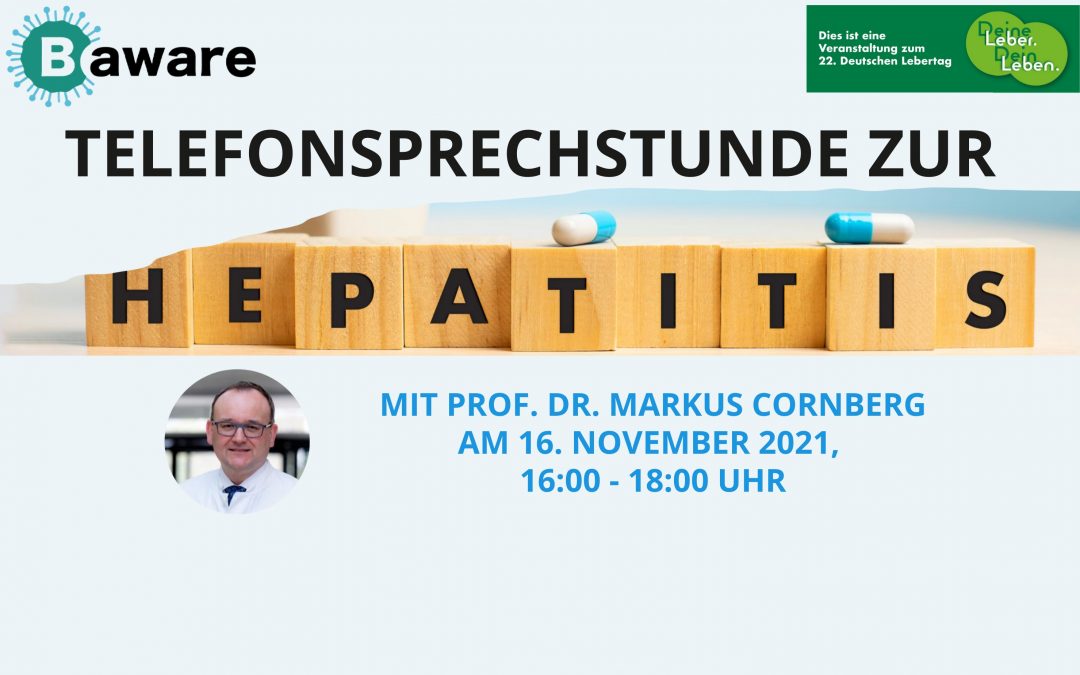
Sprechen Sie im Rahmen einer speziellen Telefonsprechstunde zur Hepatitis B direkt mit Prof. Dr. Markus Cornberg, Erstautor der aktuellen Leitlinie zur Hepatitis B und Oberarzt an der Medizinischen Hochschule Hannover, einem der “TherVacB”-Prüfzentren.
Prof. Cornberg wird alle Fragen zur Hepatitis B beantworten – von „Was sind mögliche Wege der Ansteckung?“ oder “Trägt die gesetzliche Krankenkasse in Deutschland ein Screening auf Hepatitis B?” bis hin zu „Was bedeuten meine Leberwerte?“ und „Wie muss die Erkrankung behandelt werden?“.
Die Telefonsprechstunde zur Hepatitis B ist Teil der „B_Aware-Kampagne“ zur Aufklärung über Hepatitis B und findet anlässlich des Deutschen Lebertages am 16. November 2021 zwischen 16:00 und 18:00 Uhr statt. Sie erreichen Herrn Prof. Cornberg unter 01805 – 45 00 60. Für ein Telefonat fallen Verbindungskosten in Höhe von € 0,14/Min. aus dem deutschen Festnetz und max. € 0,42/Min. aus dem Mobilfunk an.
Weitere Informationen zur Lebergesundheit anlässlich des 22. Deutschen Lebertages finden Sie bei unserem Kooperationspartner, der Deutschen Leberstifung.
Lug 28, 2021
Every 30 seconds one person is dying from a hepatitis related illness. During the COVID-19 pandemic, there is a growing need to accelerate hepatitis elimination efforts. The TherVacB project team in Europe and Tanzania, working of clinical trial preparation on viral hepatitis B, remains fully dedicated to achieving the global elimination goal by 2030.

Mag 14, 2021
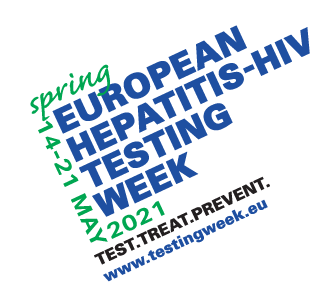
In times of COVID-19, European Testing Week aims to increase integrated testing efforts & promote awareness on the benefits of hepatitis and HIV testing!
This Spring European Testing Week 2021 and with COVID-19, we won’t be going back to “testing as usual”. Find out here about innovative testing strategies for viral hepatitis in times of COVID-19.
Now in its ninth year, the European campaign encourages partner organisations — in community, health care and policy institutions — throughout Europe to unite for one week in spring and in autumn to increase testing efforts and promote awareness on the benefits of earlier hepatitis and HIV testing.
Actually, European Testing Week supports testing activities throughout the year: To find out where you can have a test for HIV, hepatitis or other sexually transmitted infections use the European Test Finder. Hundreds of testing services for viral hepatitis, HIV and STIs are registered.
Find out more here.
Mag 13, 2021
Translations of the revised TherVacB website are now available in four languages!
To make info about the TherVacB vaccination study and the European HBV Registry more accessible to a Europen audience, we have partnered with researchers at study centres to produce this series of translations. The English version has now been joined by:
In addition to the TherVacB clinical trial, the TherVacB team has established a European registry for patients with chronic Hepatitis B. The European HBV Registry is currently active in Italy, Spain, UK and Germany and collects patient data on virological and immunological parameters during a hepatitis B virus infection. Every participant supports, with the data generated from him- or herself, to a better understanding of the HBV-mediated disease and to develop or refine therapies. Ultimately, this will help the community of patients in general!